 Sanmi Dawodu

Biblical Habits for a Renewed Mind
The apostle Paul’s instruction in Romans 12:2 is one of the most searching commands in the entire New Testament. He does not say, “Wait until your mind changes.” He says, “be ye transformed by the renewing of your mind” — a present, continuous, active process. If you have ever wondered what biblical habits for a renewed mind actually look like on an ordinary Tuesday morning, this article is for you. Not theory. Not vague encouragement. Specific, daily habits grounded in Scripture that interrupt old patterns and make space for God’s Word to do its reforming work.
Why Your Mind Needs More Than Motivation
Most Christians know they should “think better.” They have heard the sermons. They have underlined the verses. But knowledge alone does not change a mind that has been shaped by years of fear, disappointment, comparison, and cultural noise. Motivation fades. Habits, rightly structured, stay.
Neuroscience confirms what Scripture has always declared: the brain is genuinely changeable. Research published through the National Institutes of Health consistently shows that repeated mental activity reshapes neural pathways over time — a process scientists call neuroplasticity. God designed your mind to be reshaped by what you consistently feed it. That is not a self-help concept; it is the biological echo of a spiritual truth Paul wrote two thousand years ago.
The question is not whether your mind is being formed. It is being formed right now — by your news feed, your anxieties, your conversations, your memories. The real question is: formed by what?
The Foundation: What Romans 12:2 Is Actually Saying
“And be not conformed to this world: but be ye transformed by the renewing of your mind, that ye may prove what is that good, and acceptable, and perfect, will of God.” — Romans 12:2
Paul’s language here is deliberate. The Greek word translated “transformed” is metamorphoō — the same root used to describe Jesus’s transfiguration in Matthew 17. It is not cosmetic change. It is a change in nature, from the inside out. And the instrument of that transformation is the renewal — the anakainōsis, the making new — of the mind.
This renewal is not passive. It requires that you actively resist conformity to the world’s patterns and actively engage with God’s truth. For a deeper look at the specific role Scripture plays in this process, read our full guide on how to renew your mind with Scripture.
Biblical Habits for a Renewed Mind: A Practical Daily Framework
What follows is not a rigid programme but a set of proven, Scriptural habits you can begin building today. Adjust the timing to your season of life. The goal is consistency, not perfection.
Habit 1 — Begin the Day with Scripture Before Anything Else
The mind is most receptive and most vulnerable in those first waking minutes. What enters first tends to set the emotional and cognitive tone for the day. Before the phone, before the news, before the mental to-do list — open the Word.
Psalm 119:147 says, “I prevented the dawning of the morning, and cried: I hoped in thy word.” The psalmist was intentional about meeting God’s Word before the day’s demands arrived. This is not legalism; it is wisdom. A practical approach is to keep your Bible — physical or digital — as the first thing you reach for. Even ten minutes of unhurried reading reshapes the morning.
For help building this into a sustainable structure, our article on how to build a disciplined morning routine as a Christian walks through this in detail.
Habit 2 — Meditate on Scripture, Not Just Read It
Reading is exposure. Meditation is absorption. Joshua 1:8 instructs, “This book of the law shall not depart out of thy mouth; but thou shalt meditate therein day and night, that thou mayest observe to do according to all that is written therein.” God explicitly connects meditation to obedience and breakthrough — “then thou shalt make thy way prosperous, and then thou shalt have good success.”
Biblical meditation is not emptying the mind. It is filling the mind with a specific truth and turning it over slowly, like examining a diamond from different angles. Choose one verse or passage. Read it aloud. Ask: What does this tell me about God? About myself? What does it require of me today? Sit with it during your commute, your lunch break, before sleep.
Bible Gateway’s Scripture Engagement resources offer helpful frameworks for how Christians throughout history have practised meaningful engagement with God’s Word beyond surface-level reading.
We have written specifically about this practice in our guide on how to renew your mind daily as a Christian — including how to make meditation realistic for busy schedules.
Habit 3 — Practise Intentional Thought-Capture
Paul’s instruction in 2 Corinthians 10:5 is military in its language: “Casting down imaginations, and every high thing that exalteth itself against the knowledge of God, and bringing into captivity every thought to the obedience of Christ.” This is not passive. It is active warfare against the mental patterns that contradict what God says is true.
Thought-capture is the habit of noticing what you are thinking and evaluating it against Scripture before you accept it as fact. When a thought arrives — I am a failure. God has forgotten me. This will never change — you do not simply push it away. You name it, test it against what the Word says, and consciously replace it with truth. This takes practice. It feels awkward at first. It becomes instinctive over time.
Keep a small notebook or use your phone’s notes app. When a recurring negative thought surfaces, write it down beside the Scripture that contradicts it. This externalises the process and makes the habit easier to sustain. Our broader discussion of daily habits to transform your mind as a Christian expands on this and related practices.
Habit 4 — Pray Scripture Back to God
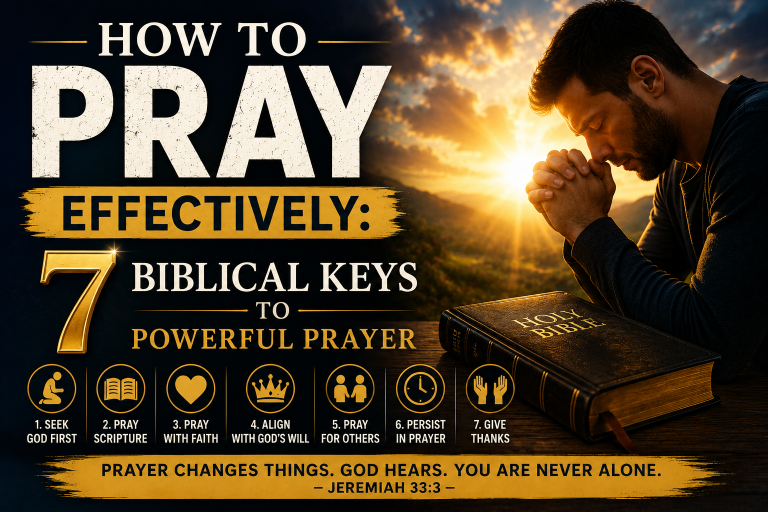
Prayer is not just petition; it is alignment. When you pray using the language of Scripture, you are training your mind to think within God’s framework rather than your own anxieties. The Psalms are the Bible’s own prayer book — raw, honest, full of lament and praise alike. Philippians 4:6–7 adds: “Be careful for nothing; but in every thing by prayer and supplication with thanksgiving let your requests be made known unto God. And the peace of God, which passeth all understanding, shall keep your hearts and minds through Christ Jesus.”
The peace Paul describes is described as a guard — literally standing watch over your heart and mind. Regular, Scripture-informed prayer is a key mechanism through which that guard is posted. For practical help in making this a consistent daily practice, see our article on how to stay consistent in prayer and Bible reading.
Habit 5 — Limit Inputs That Contradict What You Are Building
Renewal is not only about what you add; it is also about what you reduce. Romans 12:2 begins with “be not conformed” — a word of restriction before it becomes a word of transformation. If you spend two minutes in Scripture and four hours consuming content shaped by fear, cynicism, comparison, and worldly values, the Scripture will struggle to take root.
This is not a call to isolation or ignorance. It is a call to intentional stewardship of your mental diet. The American Psychological Association has documented the measurable impact that high-volume media consumption has on anxiety, self-perception, and mood. Wisdom means setting boundaries — specific limits on news consumption, social media scrolling, and entertainment that consistently draws your mind in the opposite direction of where you are trying to go.
Habit 6 — Engage in Community That Reinforces the Word
Proverbs 27:17 says, “Iron sharpeneth iron; so a man sharpeneth the countenance of his friend.” Mind renewal was never designed to be a solo pursuit. Regular engagement with a local church, a small group, or a spiritually accountable friendship provides the external reinforcement that internal habits need to survive hard seasons.
When you are around people who speak Scripture naturally, who pray with expectation, and who call out the best in you according to God’s design, your thinking is being shaped even in conversation. Consistent community is not optional for the serious Christian — it is a core habit of renewal. If you are working on building spiritual disciplines more broadly, our guide on how to build spiritual disciplines that stick addresses how to make these habits sustainable in real life.
A Practical 7-Day Action Plan
- Day 1–2: Identify your current morning routine. Choose one Scripture verse to read before touching your phone. Write it on a card.
- Day 3–4: Add five minutes of meditation on that same verse. Ask the three questions: What does this say about God? About me? What does it ask of me?
- Day 5: Write down three recurring negative thoughts. Find one Scripture that directly contradicts each one.
- Day 6: Pray one of those Scriptures back to God intentionally. Speak it aloud as a declaration of trust.
- Day 7: Audit your media intake. Identify one input to reduce and one Scriptural input to replace it with.
Repeat this cycle. Expand it. Build on it. The goal is not to complete a programme but to form a pattern of living.
For additional guidance on hearing God’s voice through regular Bible engagement, our article on how to hear God speak through the Bible is a natural companion to this framework.
Got Questions offers a solid theological overview of what mind renewal means in the broader context of sanctification, if you want to go deeper on the doctrinal foundation beneath these habits.
The Gospel Coalition has also compiled practical methods for Scripture meditation from a Reformed evangelical perspective that complement the habits outlined here.
A Note on Struggle and Grace
You will have days when the old thoughts rush back louder than the new ones. That is not evidence that the process is failing. It is evidence that the process is necessary. Renewal is cumulative. Every time you choose the Word over the worry, you are participating in what God is already doing in you. Philippians 1:6 holds: “Being confident of this very thing, that he which hath begun a good work in you will perform it until the day of Jesus Christ.”
The work is His. The habits are your cooperation with it.
Building Biblical Habits for a Renewed Mind: The Long View
There is no shortcut to a transformed mind. But there is a clear path. It is walked one morning, one verse, one captured thought, one honest prayer at a time. The habits described here are not new inventions — they are the practices of faithful believers across centuries who found that God’s Word, consistently engaged with, does exactly what God said it would do: renew, reshape, and transform.
Start today. Start small. Start trusting that the God who commanded the renewal is fully committed to completing it in you.
Closing Prayer
Lord, I bring my mind to You — with its worn grooves and familiar fears, its old narratives and stubborn doubts. I do not ask for overnight transformation; I ask for the grace to be faithful today. Help me to open Your Word before the world speaks to me. Help me to slow down long enough to let Your truth sink deeper than habit. Guard my mind, as You promised. Shape my thinking toward Yours. I trust that what You have begun, You will complete. In Jesus’ name, amen.
Frequently Asked Questions
What does the Bible mean when it says “renew your mind” in Romans 12:2?
In Romans 12:2, Paul uses the Greek word anakainōsis for “renewing,” which means a making new — not a patch-up but a genuine renovation of the mind’s orientation. The command is set in contrast to being “conformed” to the world’s patterns. To renew the mind means to progressively replace thinking shaped by worldly