 Sanmi Dawodu
From Sinai to Pentecost: God Comes Down in Fire
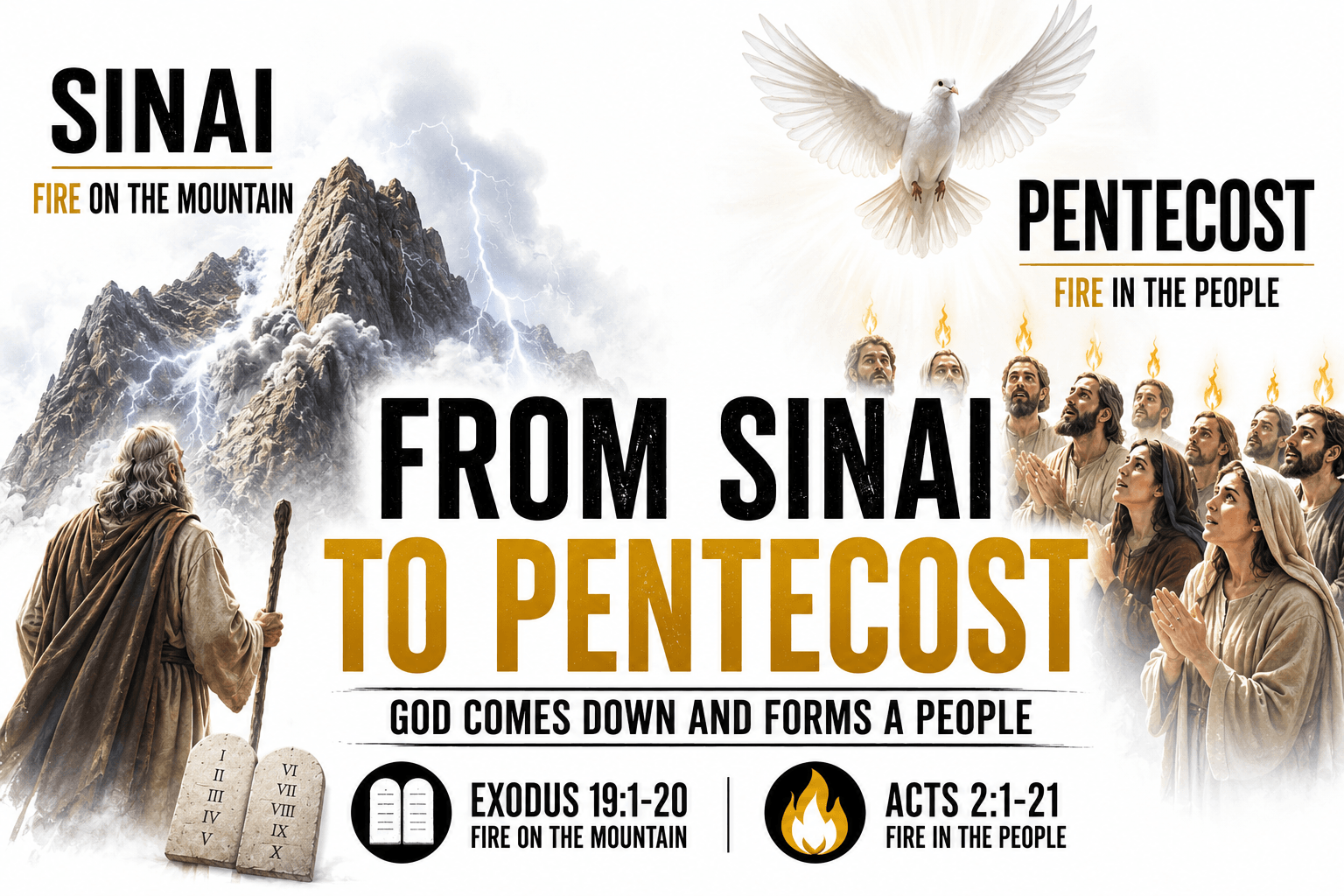
The journey from Sinai to Pentecost marks two profound moments in Scripture where heaven opens, and God enters human history with uncontainable power. These events are not coincidental; they are divinely connected.
At Mount Sinai, thunder rolls, lightning splits the sky, and the mountain is wrapped in thick smoke. The voice of God shakes the earth as He forms a nation — Israel, His covenant people, redeemed from Egypt and drawn into a binding relationship with the living God.
In the Upper Room at Pentecost, a sound like a violent, rushing wind fills the house, and tongues of fire rest on each believer. The disciples spill into the streets, and every nation under heaven hears the mighty works of God in their own language. In this moment, God forms the Church.
From Sinai to Pentecost, these are not two separate stories but chapters of one great redemptive narrative. At Sinai, God writes His law on tablets of stone. At Pentecost, He writes that same law on living hearts. At Sinai, fire descends on an untouchable mountain. At Pentecost, fire rests on the people God has chosen to indwell.
The God who descended then is still descending now. The question for every soul remains: will you let the fire land on you?
I. From Sinai to Pentecost: God Calls Before He Commissions
Text: Exodus 19:3–6
Before any commandment is spoken, God gives Moses a startling declaration:
“Ye shall be unto me a kingdom of priests, and an holy nation.”
Exodus 19:6 (KJV)
Three months out of Egypt, former slaves still bearing scars of bondage, God declares: you are Mine. You are royal. You are holy.
Notice the sequence. God does not say: obey the law, and then I will accept you. He says: I have already delivered you — now walk worthy of who I have declared you to be. The commandments in Exodus 20 are not conditions of the relationship but contours of it. God calls before He commands. He saves before He shapes.
This pattern repeats at Pentecost. Jesus instructs the disciples to wait in Jerusalem until the Holy Spirit comes. God is not recruiting talented volunteers; He is filling surrendered vessels.
The Church is not a human organization running programs in God’s name. It is a people called into communion with the living God, then sent out to transform the world.
Application: Many desire the assignment but resist the intimacy. We want to do things for God while keeping Him at arm’s length. But God seeks our surrender, not our service. Before He can commission you, He must have you.
II. The Same God from Sinai to Pentecost: Filling Souls
Texts: Exodus 19:16–20 | Acts 2:1–4
Stand at the foot of Sinai and feel what Israel felt: thunder, lightning, a thick cloud, a trumpet blast, a mountain wrapped in fire, smoke like a furnace, the earth quaking — and then the voice of God.
Now read Luke’s account in Acts 2. A sound from heaven like a mighty rushing wind fills the house. Tongues of fire rest on each of them. Every person is filled with the Holy Spirit.
This is no coincidence. Luke echoes Sinai to show that the same God who descended in fire on that mountain is descending in fire on these people. Pentecost is Sinai — fulfilled, internalized, and personalized.
| At Sinai | At Pentecost |
|---|---|
| God’s presence was external | God’s presence becomes internal |
| Only Moses drew near | Every believer receives the Spirit |
| Boundaries kept the people back | Grace brings sinners near through Christ |
| The fire consumed the mountain | The fire rests on the people |
At Sinai, God was holy and unapproachable. At Pentecost, God is holy and indwelling. The distance is destroyed — not because God lowered His standard, but because Jesus satisfied it. The Cross is the meeting place: the fire that once kept us distant fell on Jesus, so that God’s fire could now fill us. From Sinai to Pentecost, the God who came down in fire remains unchanged. The question is still the same: will you let the fire land on you?