 Sanmi Dawodu

When Progress Is Slow: Keep Going Anyway
When Progress Is Slow: Keep Going Anyway
If you have been wondering how to keep going when progress feels slow spiritually, you are not in crisis — you are in a season. And seasons, by design, do not last forever. But they do require something specific from you while they are happening: faithfulness without proof, obedience without applause, and movement without visible momentum. That is one of the hardest assignments God gives to His people, and yet it is often the most formative one.
This article is for the believer who has prayed, obeyed, planted seeds, and still sees nothing breaking ground. You have not failed. God has not gone silent. What is actually happening may be far more intentional than you realise.
The Lie Slow Progress Tells You
Slow progress whispers the same lie in every season: “Nothing is working. You were wrong. God is not in this.” That whisper feels authoritative because it arrives at your lowest point, when you are tired, when comparison is loudest, and when your effort seems wildly disproportionate to your results.
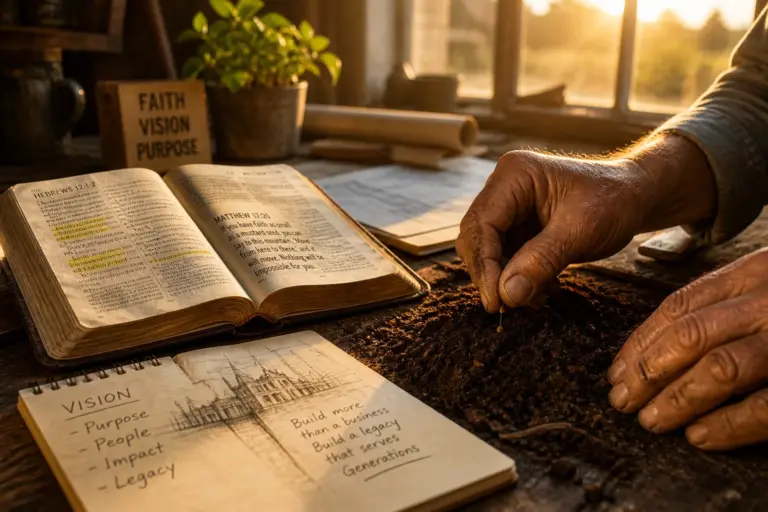
But here is what is true: the absence of visible fruit is not evidence of the absence of God’s activity. Jesus taught this plainly in the parable of the growing seed: “So is the kingdom of God, as if a man should cast seed into the ground; And should sleep, and rise night and day, and the seed should spring and grow up, he knoweth not how” (Mark 4:26–27). The farmer did not create the growth. The farmer could not even see the growth at first. But the growth was happening, hidden in soil that looked entirely unchanged from the surface.
Your waiting season may look like nothing on the outside. Underground, something is being established.
Seedtime, Harvest, and the Rhythm God Never Cancelled
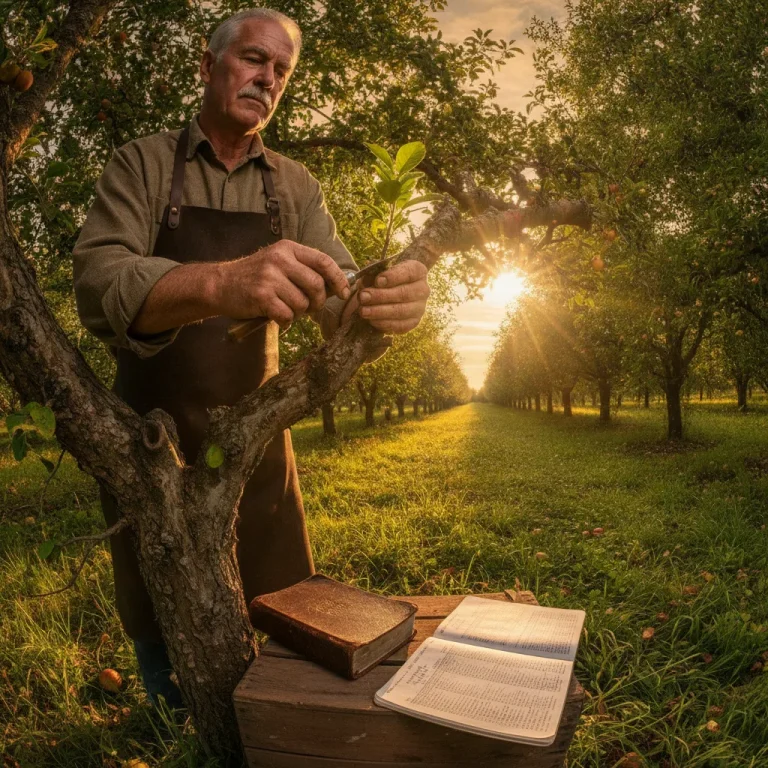
After the flood, God made an unconditional promise that runs through every generation: “While the earth remaineth, seedtime and harvest, and cold and heat, and summer and winter, and day and night shall not cease” (Genesis 8:22). Notice that God did not promise there would be no gap between seedtime and harvest. He promised the rhythm itself would continue. Seedtime always precedes harvest. Always.
The agricultural world takes this for granted. No farmer plants wheat on Monday and expects bread by Friday. The entire farming process is a long act of trust — preparing soil, planting seed, watering consistently, protecting the field, and then waiting on a biological process that no amount of human effort can accelerate past its proper time.
Your calling, your faith, your character, and your capacity work the same way. God is not slow in the way we define slow. As the apostle Peter reminds us, “The Lord is not slack concerning his promise, as some men count slackness” (2 Peter 3:9). His timeline is not a malfunction. It is a feature.
If you want to understand more about how to align your pace with God’s process, this piece on how to trust God in uncertain seasons will give you a solid theological and practical foundation.
Why God Builds Character Before He Releases Capacity
One of the clearest Kingdom principles woven through Scripture is this: God entrusts greater capacity to those who have proven faithful with what they already carry. Jesus stated it directly in the parable of the talents — “Well done, thou good and faithful servant: thou hast been faithful over a few things, I will make thee a ruler over many things” (Matthew 25:21). The promotion came after faithfulness, not before it.
Joseph spent years in a pit and a prison before he stood in a palace. David spent years tending sheep before he sat on a throne. Paul spent time in Arabia in obscurity after his Damascus Road encounter before he began his public ministry (Galatians 1:17–18). In each case, the hidden season was not a delay — it was the curriculum.
God was not wasting their time. He was building the interior architecture that the exterior assignment would eventually require. The position comes after the preparation, not instead of it.
This is why learning how to be consistent in your Christian walk matters so deeply during slow seasons. Consistency is not glamorous. It is, however, exactly what forms the character God can trust with expanded influence and responsibility.
How to Keep Going When Progress Feels Slow Spiritually: A Practical Action Plan
Spiritual encouragement without practical direction leaves us inspired but stuck. Here are concrete steps you can begin today.
1. Redefine What Progress Looks Like Right Now
Progress is not always a visible result. Sometimes progress is resisting the urge to quit. Sometimes it is choosing prayer over panic, or Scripture over scrolling, or obedience over convenience. Expand your definition of progress to include the internal work God is doing, not just the external outcomes you can measure.
2. Build a Faithfulness System, Not a Motivation System
Motivation is unreliable. It rises and falls with your emotions, your circumstances, and your energy levels. Faithfulness is a decision you make in advance, rooted in conviction rather than feeling. Build routines that run whether you feel inspired or not — a consistent prayer time, a daily reading plan, a regular rhythm of worship and community. Learn how to apply this practically through this guide on how to be disciplined as a Christian daily.
3. Protect Your Prayer Life at All Costs
Slow seasons are the seasons most likely to erode your prayer life, precisely because prayer feels futile when you cannot see results. But prayer during the waiting season is not pointless — it is the mechanism through which God sustains your faith, recalibrates your perspective, and keeps your heart aligned with His purposes. Do not let discouragement silence the very discipline that keeps you spiritually alive. For help maintaining this, see this practical guide on how to stay consistent in prayer and Bible reading.
4. Review Your Long-Term Vision Regularly
Short-term stagnation becomes unbearable when you have lost sight of the long-term picture. Habakkuk 2:2–3 instructs us to write the vision and make it plain, because there will be seasons when it tarries and you need something to anchor you. Revisit the calling, the promise, or the goal God placed in your heart. Write it down. Pray over it. Keep it visible. This article on how to stay focused on long-term goals as a Christian offers a thorough framework for doing exactly that.
5. Study the Lives of Biblical Perseverers
The Bible is full of men and women who pressed forward through extended seasons of waiting. Hebrews 11 is essentially a gallery of people who trusted God’s promises without receiving all of them in their lifetimes. Study them. Let their stories recalibrate your sense of normal. The full text of Hebrews 11 (KJV) is available to read and meditate on at any time.
6. Invest in Growth Even Without Visible Output
Use slow seasons to read, learn, and build capacity. Do not wait for the harvest to start developing the skills, knowledge, and wisdom the harvest will require. Entrepreneurs and Christian leaders who understand this principle tend to emerge from slow seasons stronger than those who simply endure them. The biblical growth mindset for Christian entrepreneurs explores how this principle applies to faith-driven work and ambition.
7. Find a Community of Faithful People
Isolation amplifies discouragement. Find people who are running the same race — not people who will simply agree with your frustration, but people who will speak truth, pray with you, and remind you of what God has already done. The writer of Hebrews connects perseverance directly to community: “And let us consider one another to provoke unto love and to good works: Not forsaking the assembling of ourselves together” (Hebrews 10:24–25). Research in the field of social connection and resilience, published by the American Psychological Association, consistently affirms that community is one of the strongest protective factors against the kind of burnout slow seasons produce.
Renewing Strength for the Long Road
Isaiah 40:31 remains one of the most sustaining promises in all of Scripture: “But they that wait upon the LORD shall renew their strength; they shall mount up with wings as eagles; they shall run, and not be weary; and they shall walk, and not faint.” Notice the progression — flying, running, and then walking. The deepest level of endurance is not the spectacular surge; it is the steady, faithful walk. That is what God promises to sustain.
For a full meditation on this passage and how it applies to seasons of waiting, this study on renewing your strength and the power of waiting will give you much to carry forward.
The biblical theology of waiting on God has been explored by trusted theological resources and consistently affirms that waiting in Scripture is not passive resignation — it is active, expectant trust directed toward a God who is always working on behalf of His people.
Keep Going: Your Faithfulness Is the Harvest in Progress
Understanding how to keep going when progress feels slow spiritually ultimately comes down to one reorientation: your faithfulness right now is not just preparation for the harvest — it is part of the harvest. The formation happening in you during this season has eternal value, regardless of what visible results eventually appear. God is not withholding from you while you wait. He is completing something in you that the next season will need.
Do not despise small beginnings. Do not abandon the field because the ground looks unchanged. Keep planting. Keep watering. Keep praying. Keep building. The seed you have sown is alive underground, and the God of seedtime and harvest has never broken His word.
Galatians 6:9 says it plainly: “And let us not be weary in well doing: for in due season we shall reap, if we faint not.” The condition is simply this — do not faint. Keep going anyway.
Frequently Asked Questions
Why does God allow seasons where my spiritual or personal progress feels completely invisible?
God frequently works most deeply in seasons that look the most still on the surface. Invisible seasons serve at least three purposes in Scripture. First, they build character — the interior qualities of patience, humility, trust, and perseverance that visible success alone cannot develop. Second, they protect us from receiving influence or responsibility before we have the capacity to steward it well. Third, they deepen our dependence on God rather than on results, outcomes, or the approval of others. Romans 5:3–4 frames this beautifully: “tribulation worketh patience; And patience, experience; and experience, hope.” The progression is deliberate. What looks like nothing on the outside is a very specific work on the inside.
What does the Bible say about persevering when you are doing the right things but not seeing results?
The Bible addresses this with remarkable directness. Galatians 6:9 tells us not to grow weary in well-doing because the harvest comes in due season to those who do not quit. James 1:4 teaches that the testing of faith produces patience, which is meant to have its perfect work in us. Hebrews 12:1 frames the Christian life explicitly as a race requiring endurance. The consistent biblical message is that right actions in the right spirit, sustained over time, are never wasted — even when the timeline feels unbearable. The full passage of James 1:2–4 (KJV) is especially useful for meditation during these seasons. God does not grade our faithfulness by how quickly results appear.
How do I stay disciplined and faithful when discouragement makes me want to quit?
Discouragement is real, and minimising it does not serve you. Acknowledge it honestly before God — the Psalms model this with extraordinary candour. Then take these concrete steps. First, shrink your focus to the next faithful action, not the entire journey. Second, remove comparisons with people in different seasons. Third, reinforce your routines even when — especially when — they feel hollow, because discipline maintained through feelings of futility produces a depth of character that ease never can. Fourth, find Scripture to pray specifically over your situation, not just to read abstractly. The psychology of sustained motivation