 Sanmi Dawodu

Your Gifts, God’s Business Plan
If you have ever asked yourself how to use your gifts for business success as a Christian without losing what matters most, you are asking the right question at the right time. The tension is real: you have something inside you — a creative ability, a problem-solving mind, a gift for teaching, leading, building, or serving — and you sense it was placed there on purpose. But translating that sense of calling into an actual, growing, Kingdom-aligned business can feel like trying to read a map with half the pages missing.
This article is that missing half. We are going to work through what Scripture actually says, use the Parable of the Talents as a practical framework, and give you a concrete action plan you can begin this week. No vague inspiration. No exaggerated promises. Just faithful, grounded truth about how God-given gifts become the engine of a business that serves people and honours Him.
The Parable of the Talents Is a Business Briefing
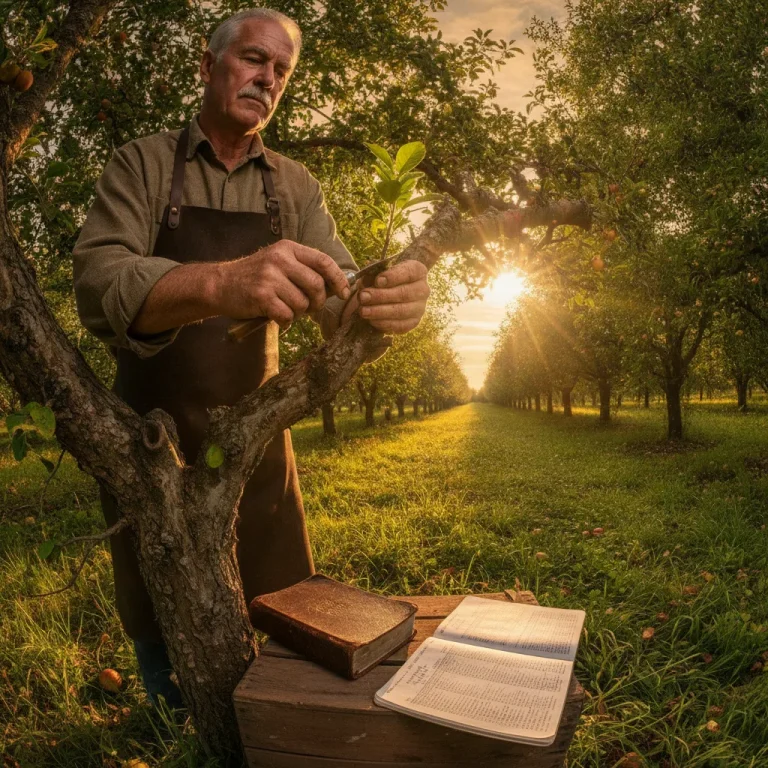
Matthew 25:14–30 is one of the most searched parables in the Bible, and it is also one of the most misread. Many people reduce it to a motivational poster about not wasting potential. But read it again carefully and you will notice something striking: the master in the story is not impressed by safety. He is not neutral about inaction. He is displeased by the servant who buried what he was given.
“His lord answered and said unto him, Thou wicked and slothful servant… thou oughtest therefore to have put my money to the exchangers, and then at my coming I should have received mine own with usury.” — Matthew 25:26–27
The word translated “talents” referred to a unit of monetary weight in the ancient world, but the spiritual principle is universal: what God entrusts to you is meant to produce. It is meant to multiply. Burying it — whether out of fear, false humility, or simple neglect — is not caution. It is disobedience dressed up as modesty.
The two faithful servants did not wait for a detailed instruction manual. They went to work with what they had. That is the posture God rewards: active, intentional stewardship of what He has placed in your hands.
Your Gift Is Not Just Personal — It Is Purposeful
The Apostle Paul makes it clear that spiritual gifts are not given for private benefit. “But the manifestation of the Spirit is given to every man to the profit of withal.” — 1 Corinthians 12:7. Every gift carries an assignment that reaches beyond you.
This is the first and most important bridge to understand between gifting and business: a gift that solves problems for other people is already halfway to a viable offer. When your gift meets a genuine human need, you have the seed of a product, a service, a course, or a consultancy. Research consistently shows that people who experience their work as purposeful — as connected to something larger than a paycheck — perform at higher levels and sustain that performance longer. God designed this. He built meaning into the way work functions.
This is why building a business on purpose as a Christian is not idealism. It is strategy. Purpose-driven businesses attract loyal customers, committed team members, and a clarity of direction that purely profit-driven models struggle to manufacture.
How to Identify Which Gifts Drive Your Business
Not every gift you possess will anchor your business, and that is fine. The question is: which of your gifts creates the most disproportionate value for the people you are called to serve?
Consider these three diagnostic questions:
- What do you do almost effortlessly that others find genuinely difficult? Ease does not always mean unimportance. Often it means deep gifting.
- What problems do people bring to you even when you have not advertised your ability to solve them? Unsolicited trust is a strong signal of authentic gifting.
- Where does your effort produce outsized results compared to others putting in similar time? This is where God has given you leverage.
The CliftonStrengths assessment and other structured tools can help surface patterns you may not have articulated clearly. But do not stop at self-discovery. Bring those findings before God in prayer and bring them to trusted, spiritually mature people in your life. Proverbs 11:14 reminds us that safety is in the multitude of counsellors.
How to Use Your Gifts for Business Success as a Christian: A Practical Framework
Here is a step-by-step framework grounded in the stewardship principles Jesus taught:
Step 1 — Name Your Gifts Clearly
You cannot steward what you have not identified. Write down the three to five abilities that consistently produce results and generate genuine value for others. Be specific. “I am creative” is too broad. “I can take complex financial information and explain it in plain language that non-experts act on” is a gift you can build a business around.
Step 2 — Identify the Problem Your Gift Solves
Every sustainable business solves a real problem. Match your gift to a problem that a defined group of people genuinely want solved. This is not manipulation — it is the faithful servant putting their talent “to the exchangers.” Matthew 25:14–30 shows us that faithful stewardship involves risk and effort, not passive waiting.
Step 3 — Build a Simple, Honest Offer
Translate your gift into a clear offer: a service, product, programme, or resource that delivers a specific outcome. The offer should be honest about what it does and does not do. Integrity in your offer is not separate from your ministry — it is part of it. Read more about this in our guide on how to build a Christian business with integrity and excellence.
Step 4 — Steward the Resources the Business Generates
Revenue is not the enemy of the Kingdom. It is the resource that funds mission, sustains your household, creates jobs, and enables generosity. But it requires discipline. How you manage money as a Christian business owner will either expand your capacity to serve or quietly undermine everything you are building.
Step 5 — Grow Intentionally, Not Just Opportunistically
The faithful servants in Matthew 25 doubled what they were given — that is serious growth. But growth that is not anchored in wisdom becomes instability. Develop the mindset and the practices that allow your business to scale without losing its soul. Our article on how to develop a growth mindset as a Christian entrepreneur walks through this in detail.
Biblical Stewardship Is the Engine, Not the Ornament
Here is what separates Kingdom business from religious business: in Kingdom business, biblical stewardship in business is not a values statement on the website. It is the actual operating system. It shapes how you hire, how you price, how you treat customers who are difficult, how you respond when revenue drops, and how you handle success when it arrives.
The Lausanne Movement’s theology of work affirms that marketplace activity is a legitimate sphere of Kingdom influence — not a compromise from ministry, but an expression of it. When your business reflects the character of God in its operations, it becomes a witness that no sermon alone can replicate.
This is what faithful stewardship of God-given gifts produces over time: not just a profitable business, but a credible one. A trustworthy one. One that people recommend not only because it delivers results but because it treats them with dignity.
When Fear Tempts You to Bury the Talent
The third servant in Matthew 25 was not lazy in the casual sense. He was afraid. He said plainly, “I was afraid, and went and hid thy talent in the earth.” — Matthew 25:25. Fear is one of the most common reasons gifted believers never launch, never scale, or never fully commit to the business God placed in them.
Fear of failure. Fear of judgment from other Christians. Fear that wanting business success is somehow unspiritual. Fear that if you build something significant, you will become someone you do not recognise.
These fears are understandable. But they are not valid reasons to return your gifts unused. Stewarding your gifts for business success requires confronting those fears with truth — and the truth is that God did not give you ability so it could sit undeveloped in the earth of your comfort zone.
The Apostle Paul told Timothy: “For God hath not given us the spirit of fear; but of power, and of love, and of a sound mind.” — 2 Timothy 1:7. Power, love, and a sound mind are precisely what you need to build something that lasts.
Aligning Business Direction With God’s Purpose
Alignment is not a one-time event. It is a daily practice of bringing your decisions — your pricing, your partnerships, your marketing voice, your growth targets — before God and asking whether they reflect His character and advance His purposes.
Aligning your business with God’s purpose means you are willing to say no to opportunities that are profitable but misaligned. It means you measure success not only in revenue but in the lives genuinely served and the integrity maintained along the way. And it means your business plan is subject to something higher than market trends.
Practically, this looks like regular prayer over your business strategy, honest accountability relationships, and a written statement of Kingdom purpose that you revisit when decisions get difficult. For a deeper framework on this, see our resource on how to build a business with biblical purpose.
A Practical Action Plan You Can Start This Week
- Day 1–2: Write out your top three gifts with specific evidence of how each has created value for others. Pray over the list and ask God to confirm and clarify.
- Day 3: Identify one real problem that one defined group of people faces, which your primary gift is positioned to solve.
- Day 4: Draft the simplest possible description of an offer that connects your gift to that problem. One paragraph. No jargon.
- Day 5: Share that draft with two trusted, spiritually mature people and ask for honest feedback — not encouragement, feedback.
- Day 6–7: Review your current financial habits and identify one specific area where better stewardship would give you more capacity to invest in your business’s growth.
This is not a full business plan. It is a first step of faithful action — the equivalent of putting your talent to work rather than burying it.
Conclusion
Understanding how to use your gifts for business success as a Christian is not about learning to baptise ambition with Bible verses. It is about recognising that the gifts God placed in you are Kingdom assets — and that faithful stewardship of those assets, applied with integrity, purpose, and genuine service, is exactly how Kingdom business gets built. The Parable of the Talents is not a warning dressed up as a story. It is an invitation. Go. Work. Multiply. And when the Master returns, have something to show for what He entrusted to you.
Frequently Asked Questions
What does the Bible say about using your gifts in business?
Scripture consistently presents gifts as tools for service rather than trophies for display. Romans 12:6–8 lists gifts like leadership, teaching, and giving — all of which have direct application in business contexts. The Parable of the Talents in Matthew 25:14–30 makes the stewardship expectation explicit: gifts are meant to be invested and multiplied, not preserved through inaction. Proverbs 22:29 adds: “Seest thou a man diligent in his business? he shall stand before kings.” Diligent use of God-given ability is honoured in both secular and sacred spheres.
How do I know if my business idea aligns with the gifts God gave me?
Three reliable indicators are: the business consistently requires and rewards the abilities you have identified as your core gifts; the people you serve are genuinely better off because of what you offer; and you can sustain the work over time without it requiring you to be someone God did not design you to be. If you find yourself constantly trying to perform gifts you do not have in order to make your business work, that is a signal worth praying through carefully. Alignment feels like faithful effort, not constant impersonation.