
How to Receive Fresh Fire from God: When God Reignites What Religion Has Extinguished
“Then there appeared to them divided tongues, as of fire, and one sat upon each of them. And they were all filled with the Holy Spirit.”
— Acts 2:3–4 (NKJV)
How do you receive fresh fire from God?
To receive fresh fire from the Holy Spirit, you must:
- Acknowledge honestly that the fire has gone low — bring it to God without excuses
- Remove the fire extinguishers — unconfessed sin, bitterness, formalism, and self-sufficiency (1 Thess. 5:19)
- Stir up the gift actively — fan the flame through prayer, worship, and hungry engagement with the Word (2 Tim. 1:6)
- Position yourself to receive — gather with other burning believers in united, desperate seeking
- Ask and believe — James 4:2 says “you do not have because you do not ask”
Key Scripture: 2 Timothy 1:6 — “I remind you to stir up the gift of God which is in you.”
How to Get Your Spiritual Fire Back After It Has Gone Cold
“Then there appeared to them divided tongues, as of fire, and one sat upon each of them. And they were all filled with the Holy Spirit and began to speak with other tongues, as the Spirit gave them utterance.”
— Acts 2:3–4 (NKJV)“Then one of the seraphim flew to me, having in his hand a live coal which he had taken with the tongs from the altar. And he touched my mouth with it, and said: ‘Behold, this has touched your lips; your iniquity is taken away, and your sin purged.'”
— Isaiah 6:6–7 (NKJV)Week Two Begins: From Cleansing to Fire
If your spiritual fire has gone cold — if prayer feels like a duty, worship feels hollow, and the Word of God no longer stirs anything in you — you are not alone, and you are not finished. Week One did the stripping. Week Two does the filling. And the first thing God wants to pour into every cleansed vessel is fire. Fresh fire.
We enter Week Two with clean vessels. The first seven days stripped away what was hindering — the drift, the guilt, the unconfessed sin, the broken conscience. Now we build. Now we fill. If you have walked through Day 1 (returning to God), Day 2 (forgiveness), Day 3 (the cleansing blood), Day 4 (freedom from guilt), Day 5 (restored joy), Day 6 (brokenness), and Day 7 (a clean heart) — you are ready. The vessel is clean. Now ask for the fire.
Fire is one of the dominant metaphors of the Holy Spirit in Scripture. John the Baptist declared of Jesus: “He will baptize you with the Holy Spirit and fire” (Matthew 3:11). The tongues of fire at Pentecost were not decorative — they were descriptive. They told us something essential about the nature of the Spirit’s presence: it purifies, it illuminates, it warms, it consumes, it spreads, and it transforms everything it touches. A church without fire is a church in spiritual hypothermia — still alive, but barely. Today we ask for fresh fire.
The Fire of Pentecost: What Acts 2:3–4 Actually Reveals
Acts 2 describes one of the most significant moments in human history: the descent of the Holy Spirit upon 120 believers gathered in an upper room in Jerusalem. The fire that fell on that day was not symbolic — it was visible, audible, and supernaturally real. “Divided tongues, as of fire” — the Greek word is glossa for tongues and pur for fire. And the fire distributed itself individually, sitting upon each person.
This is critical: the fire did not hover over the group collectively. It individualized itself — one tongue of fire for every single person in the room. This is the nature of the Holy Spirit’s fire: it is personal. God does not give you someone else’s fire. He gives you your fire — calibrated to your calling, your assignment, your personality, and your season. The fire that sat upon Peter was not the fire that sat upon Mary. Each flame was distinct, personal, and purposeful.
And the result was total transformation. Fishermen became theologians. Cowards became martyrs. The grieving became the glorious. And 120 frightened disciples, filled with fresh fire, turned a known world upside down within a generation.
The Greek word pur (fire) appears over 70 times in the New Testament. In every context related to the Holy Spirit, it denotes not destruction but purification and empowerment — the same fire that refines gold also fuels the engine of apostolic ministry.
The Fire That Purifies: Isaiah’s Coal and the Point of Deepest Need
Isaiah 6 records one of the most dramatic prophetic commissions in all of Scripture. The young prophet stands in the throne room of God — overwhelmed, undone, acutely aware of his sinfulness in the blinding holiness of the divine presence: “Woe is me, for I am undone! Because I am a man of unclean lips, and I dwell in the midst of a people of unclean lips; for my eyes have seen the King, the Lord of hosts” (Isaiah 6:5).
The response of God is fire — a live coal from the altar, carried by a seraph, applied directly to the prophet’s mouth. The place of his greatest acknowledged weakness — unclean lips — became the precise point of the fire’s application. God always applies His purifying fire to the point of deepest need.
“But who can endure the day of His coming? And who can stand when He appears? For He is like a refiner’s fire and like launderers’ soap. He will sit as a refiner and a purifier of silver.”
— Malachi 3:2–3 (NKJV)Fresh fire does not descend on a heart that refuses to be purified. The coal touched Isaiah’s lips and the seraph declared: “Your iniquity is taken away, and your sin purged.” Fire and cleansing are inseparable. This is why Week One’s work of repentance and cleansing was not optional preparation — it was essential positioning. The cleansed vessel is the vessel that receives the fire.
Why Spiritual Fire Goes Out: The Smoldering Wick of Isaiah 42:3
Isaiah 42:3 contains a beautiful promise about the ministry of the Messiah: “A bruised reed He will not break, and a smoking flax He will not quench.”
A smoking flax — a wick that still has some ember in it, still producing a faint wisp of smoke, still technically alive but no longer giving light or warmth — the Messiah will not extinguish. He will tend it, fan it, and restore it to full flame.
This is the condition of many believers who come to this day of prayer: they are not dead — but the flame has reduced to a wisp of smoke. The fire that once made them leap out of bed to pray, that made worship feel like flying, that made the Word of God taste like honey — has been reduced to a barely-perceptible flicker. Jesus does not despise the smoldering wick. He comes to it with breath — the breath of the Holy Spirit — and fans it back to full flame.
The Fire Extinguishers Paul Warns About in 1 Thessalonians 5:19
1 Thessalonians 5:19 contains one of the most urgent short commands in all of Paul’s letters: “Do not quench the Spirit.” The word quench — Greek sbennumi — means to extinguish a flame. Paul is explicitly telling us that the fire of God in a believer can be put out — and commanding us not to do it.
The fire is quenched by:
- Unconfessed sin — sin left unnamed before God builds a wall between the soul and the Spirit
- Spiritual neglect — fire that is not fed will always go out; neglected prayer and the Word starve the flame
- Religious formalism — going through the motions of Christianity without the heart: attending without encountering, singing without worshipping, reading without receiving
- Bitterness — Hebrews 12:15 calls bitterness a “root” that defiles many; a bitter heart is a cold heart
- Persistent disobedience — when we know what God has asked and we refuse, the Spirit’s fire dims in proportion to our rebellion
- Self-sufficiency — when we stop being desperate for God and begin to manage our Christian lives by our own strength, the fire has no fuel
Identify honestly which of these fire extinguishers has been at work. Naming them is the first act of removing them.
The Command to Stir Up the Gift: 2 Timothy 1:6 Explained
2 Timothy 1:6 contains a striking command from Paul to his spiritual son: “I remind you to stir up the gift of God which is in you through the laying on of my hands.”
The Greek word for “stir up” is anazopureo — literally to fan into flame, to rekindle, to cause a dying fire to blaze again. This is the same imagery as a bellows fanning embers: there is still something alive, something that was once burning — and the command is to take action to reignite it.
The theological implication is significant: Paul’s command implies that the fire of God in a believer can die down — and that there is a human role in its rekindling. The fire of God is sovereign in its giving. But the maintenance and re-ignition of that fire involves our active cooperation. We are not passive spectators. We are fire-tenders.
What stirs it?
- Prayer stirs it — especially intercession, which draws us into the heart of God for others
- Worship stirs it — genuine, sacrificial praise that costs something opens the heavens
- The Word, received hungrily and obeyed promptly, stirs it — not Bible reading as information-gathering, but as communion with a living God
- Fellowship with other burning believers stirs it — fire is contagious; spend time with people who are on fire and your temperature rises
- Fasting stirs it — fasting creates a kind of spiritual oxygen, removing what smothers the flame and intensifying the hunger for God
Paul commands Timothy not to wait passively for the fire to return on its own. The return of fire requires deliberate, intentional action. Fan it.
How to Position Yourself to Receive Fresh Fire from God
The 120 in Acts 2 did not receive the fire casually. Acts 1:14 records that they had been in continuous, united, devoted prayer for ten days. They had obeyed the command to wait — choosing the upper room over the street, the prayer meeting over the marketplace, the posture of seeking over the posture of striving.
The conditions that preceded the fire were:
- Gathered, not scattered — the fire fell on a community of seekers, not isolated individuals
- Unified, not divided — Acts 1:14 says they were in one accord; unity creates atmosphere for fire
- Seeking, not presuming — they did not assume the fire would come; they sought until it did
- Empty, not self-sufficient — ten days of prayer had exhausted human resources and created maximum space for the divine
- Obedient — they were doing exactly what Jesus had commanded: waiting in Jerusalem (Acts 1:4)
This does not mean that fresh fire is earned by prolonged prayer — the fire is always God’s sovereign gift. But the 120 were positioned to receive it. The fire tends to fall on gatherings — and individuals — marked by desperation, unity, surrender, and sustained seeking. Where those conditions are met, the fire falls.
What Fresh Fire Produces in a Believer’s Life
When fresh fire falls, the results are always recognizable. They are not subtle improvements. They are radical transformations:
Boldness Where There Was Timidity
Peter, who denied Jesus three times in the courtyard, stood before thousands in Jerusalem and proclaimed the resurrection without apology — after the fire fell. Acts 1:8 links fire and witness directly: “You shall receive power when the Holy Spirit has come upon you; and you shall be witnesses to Me.” Fresh fire produces boldness that cannot be manufactured by determination alone.
Witness That Overflows
The disciples did not organize an evangelism campaign after Pentecost — they simply could not stop talking about what they had seen and heard (Acts 4:20). Fresh fire makes witness natural, not forced. The testimony pours out because it is burning within.
Activated Spiritual Gifts
At Pentecost, the supernatural became natural — tongues, prophecy, healing, signs. The gifts of the Spirit are not given to the spiritually comfortable; they flow through vessels burning with fresh fire. Ask God to activate the gifts He has placed in you that have been dormant.
A Renewed Hatred of Sin
Fresh fire and compromise cannot coexist. The purer the flame, the more intolerable the darkness. This is why genuine revivals in church history are always accompanied by deep conviction of sin, public confession, and radical lifestyle change. The fire does not merely warm us — it burns away everything that is not of God.
“And they said to one another, ‘Did not our heart burn within us while He talked with us on the road, and while He opened the Scriptures to us?'”
— Luke 24:32 (NKJV)Altar Call: Come to the Fire
If the fire has gone low — if prayer has become a duty instead of a delight, if worship feels hollow, if the Word of God no longer tastes like anything — come to the altar of God today and ask for fresh fire.
Not a warmer feeling. Not a more comfortable Christian life. Fire. The kind that changes everything it touches. The kind that cannot be faked, managed, or performed. The kind that only God can give.
He is a refiner’s fire. He is the baptizer in fire. He is the One who carries a live coal from the altar and touches the lips of the prophet. If guilt has been cooling your fire (Day 4), you have already been set free. If your heart needed cleaning (Day 7), that work is done. Now come to the fire. Open your mouth. Ask. Receive.
Your fresh fire starts now — not when the feeling returns, not when the circumstances improve. The prayer itself is the spark. Fan it, and God will do the rest.
Day 8 Prayer Focus: Four Prayers for Fresh Fire
🔥 Prayer 1: Asking for Fresh Fire
Father, I ask You today for fresh fire. The fire that fell at Pentecost, the fire that touched Isaiah’s lips, the fire that burned in the hearts of the disciples on the Emmaus road — let that fire fall on me now. Purify me, illuminate me, warm me, and consume everything in me that is not of You. I am a cleansed vessel. Fill me with fire. In Jesus’ name, Amen.
🌬️ Prayer 2: Stirring Up the Gift
Holy Spirit, I stir up the gift that is in me. I obey the command of 2 Timothy 1:6 — I fan the flame by faith right now, through this prayer, through worship, through the Word, through surrender. I refuse to let the fire reduce to smoke. Fan it back to full flame. Let the fire burn brighter today than it has in years. In Jesus’ name, Amen.
🗑️ Prayer 3: Removing the Fire Extinguishers
Lord, I bring to You everything that has been quenching Your fire in my life. [Pause here and name them honestly before God.] I confess these as fire extinguishers and I remove them now. I will not let comfort, compromise, bitterness, or spiritual laziness cool what God has ignited. I do not quench the Spirit — I welcome Him. In Jesus’ name, Amen.
⚡ Prayer 4: Boldness Restored
Holy Spirit, when the fire falls, let boldness rise. Remove from me every spirit of fear and timidity that has silenced my witness. Let me speak about Jesus without apology, serve without reservation, and worship without self-consciousness. Set my tongue on fire with the testimony of what You have done. Make me dangerous for the Kingdom. In Jesus’ name, Amen.
Declaration — Day 8
I DECLARE: The fire of God is burning in me TODAY — fresh, fierce, and unquenchable! Every spiritual dullness is burned away. Every compromise is consumed. I am on fire for God — in my prayer, my worship, my witness, and my walk. The world will see the fire. Heaven will be pleased. In Jesus’ mighty name — AMEN!
📝 Reflection Questions — Day 8
- Fire Level: Honestly assess — what temperature is your spiritual fire right now? What specific thing has most contributed to any cooling that has occurred?
- Extinguishers: Which fire extinguisher has been most active in your life — unconfessed sin, spiritual neglect, formalism, bitterness, disobedience, or self-sufficiency?
- Stirring: What one specific, practical action will you take today to stir up the fire — a prayer session, a fast, a time of prolonged worship, or reaching out to a burning believer?
Frequently Asked Questions
What does “fresh fire from God” mean in the Bible?
What does 2 Timothy 1:6 mean — “stir up the gift of God”?
What quenches the Holy Spirit’s fire?
What happened in Acts 2:3-4 with the tongues of fire?
How do I know if my spiritual fire has gone out?
What is the difference between Holy Spirit fire and emotional excitement in church?
He is still the baptizer in fire. Ask for fresh fire today — and don’t stop until the flame is burning bright again.
Continue the 40-Day Prayer Journey
Day 9 is next: Hunger for God. The fire you’ve stirred today needs fuel. Don’t let it go cold overnight — continue the full series at Sanmi Dawodu Ministries.
Explore the Full 40 Days Prayer Series →Week 1 Foundation: Read the Full Series
Day 8 builds on the cleansing work of Week 1. If you haven’t walked through all seven days, start at Day 1 — each day prepares you for the next.
- Day 1:How to Return to God After Backsliding: Biblical Steps That Actually Work
- Day 2:How to Receive God’s Forgiveness Completely: A Biblical Guide to 1 John 1:9
- Day 3:The Cleansing Power of the Blood of Jesus: How It Washes You Clean
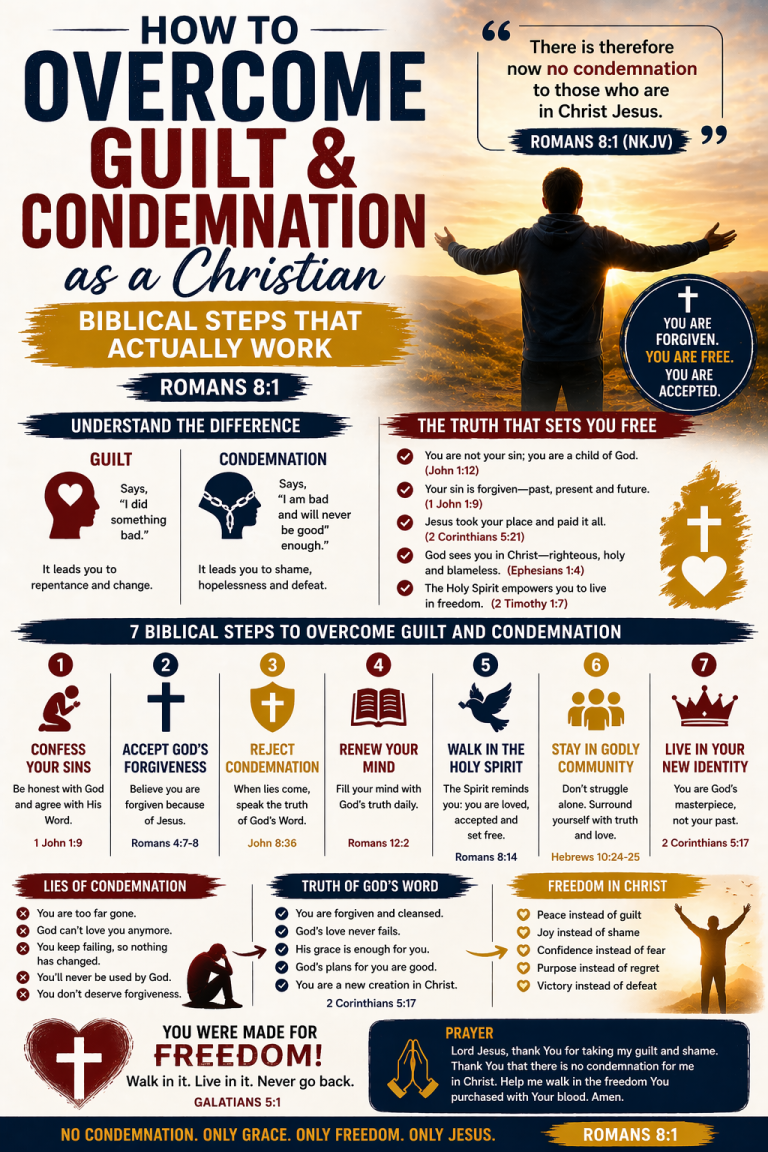
- Day 4:How to Overcome Guilt and Condemnation: Walking in Romans 8:1 Freedom
- Day 5:How to Restore the Joy of Your Salvation: Praying Psalm 51:12 Today
- Day 6:The Biblical Meaning of Brokenness Before God: Why God Works Through Broken Vessels
- Day 7:Create in Me a Clean Heart, O God: The Full Hebrew Meaning & How to Pray It